Philosophy
Tyrinėjant Memento Mori: prisiminti mirtingumą
Harri Reili5 min skaitymo
Introduction to Memento Mori
Įsivaizduokite gyvenimą, kuriame kiekviena akimirka branginama ne iš netekties baimės, o kaip gilus dabarties apkabinimas. Tai ir yra „memento mori“ esmė – stoikų praktika, kuri keičia mūsų gyvenimo būdą, primindama mirties neišvengiamybę. Ši lotyniška frazė, reiškianti „prisimink, kad turėsi mirti“, yra ir blaivus priminimas, ir įkvepiantis raginimas veikti. Ji kviečia susimąstyti apie savo mirtingumą ir ragina sutelkti dėmesį į tai, kas išties svarbu. Memento mori samprata turi gilias istorines šaknis ir išlieka aktuali, skatindama gyventi apgalvotai ir prasmingai.
Stoikų filosofijos kontekste memento mori – tai pamatinis principas, ugdantis atsparumą ir dorybę. Pripažindami gyvenimo laikinumą, tampame dėmesingesni dabarčiai ir veikiame sąmoningai. Toks mąstymas apie mirtingumą gali tapti galingu asmeninio augimo katalizatoriumi: jis padeda išsigryninti vertybes ir gyventi tikslingiau.
Tyrinėdami memento mori filosofines šaknis ir jos taikymą kasdienybėje, atrasite, kaip ši laikui nepavaldi idėja gali praturtinti jūsų patirtį ir suteikti paguodos gyvenimo neapibrėžtumo akivaizdoje. Kviečiu leistis į kelionę į stoikų išminties šerdį.
The Philosophical Roots of Memento Mori
Ancient Practices
Memento mori praktika nėra vien tik stoikų palikimas; ji atsiliepia įvairiose senovės kultūrose, kurios mirtingumą laikė neatsiejama gyvenimo dalimi. Pavyzdžiui, senovės egiptiečiai statė puošnius kapus ir balzamuodavo kūnus, taip išreikšdami ryškų mirties ir pomirtinio gyvenimo suvokimą. Panašiai ir viduramžių krikščioniškoji tradicija mene dažnai vaizdavo kaukoles ir skeletus, primindama apie žmogaus mirtingumą ir žemiško gyvenimo laikinumą.
Stoicism and Mortality
Stoikų filosofijoje memento mori – tai esminė nuostata, vedanti žmogų dorybingo gyvenimo link. Stoikai mirtį laikė ne baugiu ir liguistu galu, o natūralia gyvenimo dalimi, kurią dera priimti. Šis priėmimas yra svarbus stoikų apmąstymuose apie mirtingumą: jis išvaduoja iš mirties baimės ir leidžia sutelkti dėmesį į visavertį gyvenimą.
Vienas ryškiausių stoikų filosofų, Markas Aurelijus, dažnai meditavo apie gyvenimo laikinumą. Jis rašė: „Tu galėtum iškeliauti iš gyvenimo jau dabar. Tegul tai nulemia, ką darai, sakai ir mąstai.“ Toks požiūris ragina veikti sąžiningai ir dėmesingai, suvokiant, kad mūsų laikas ribotas. Jo „Apmąstymai“ tampa filosofiniu memento mori fonu, primenančiu, kaip svarbu gyventi pagal giliausias savo vertybes.
Kitas stoikas, Seneka, pabrėžė gyvenimo nenuspėjamumą. Jis patarė: „Visa ateitis glūdi neapibrėžtume – gyvenk iškart.“ Priimdami dabartį ir paleisdami iliuziją, kad galime kontroliuoti ateitį, kasdienybėje galime rasti daugiau ramybės ir aiškumo.
Stoikai tikėjo, kad atsigręžę į mirtingumą galime ugdyti atsparumą ir išmintį. Toks mirties suvokimas tampa stipria motyvacija siekti prasmingų tikslų ir gyventi dermėje su tikruoju savimi.
Symbolism and Modern Interpretations
Symbolism in Art and Literature
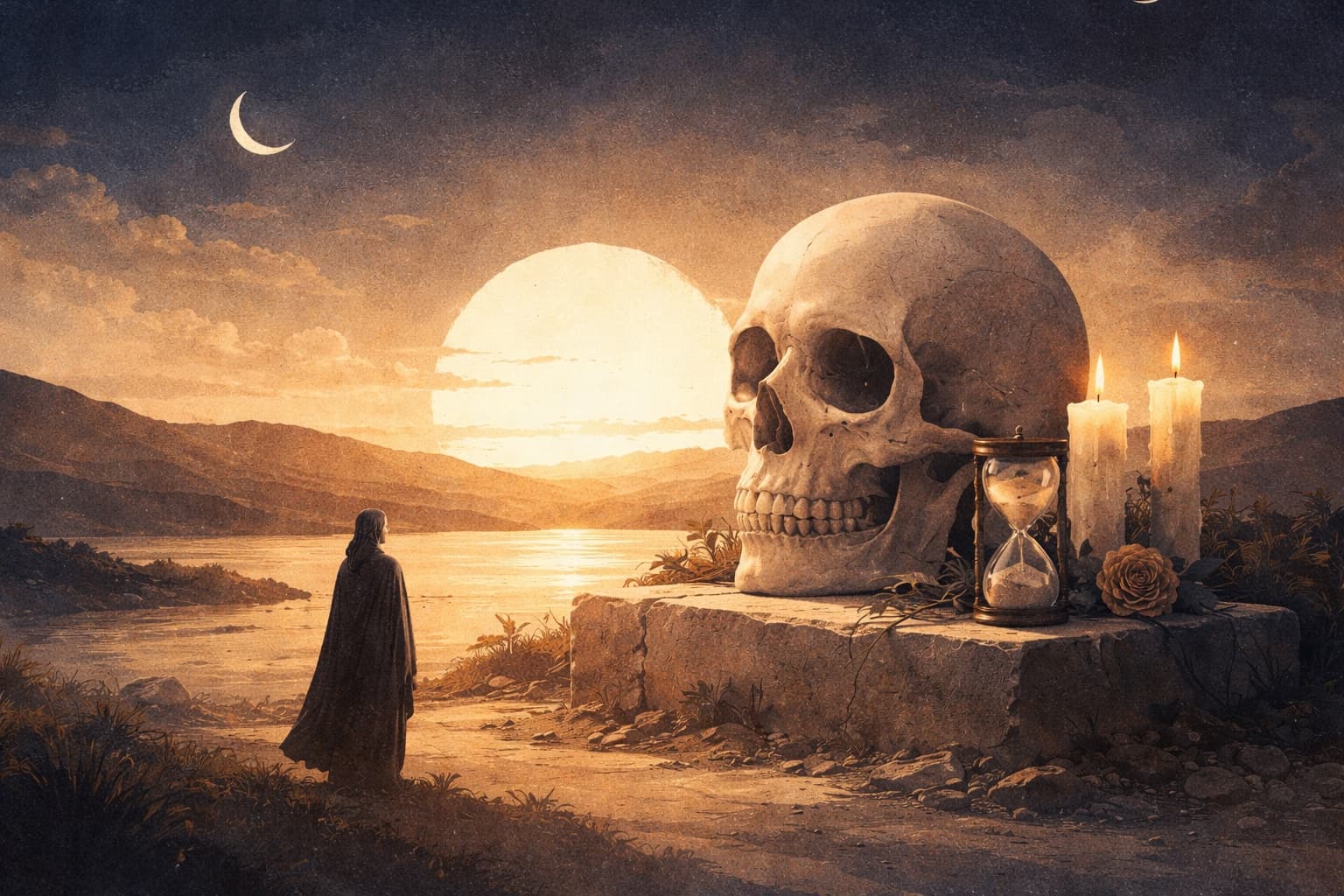
Istorijos eigoje memento mori mene ir literatūroje buvo perteikiama įvairiais simboliais. Dažni motyvai – kaukolės, smėlio laikrodžiai ir vystantys žiedai – veikia kaip jautrūs priminimai apie gyvenimo trapumą. Šie simboliai skatina refleksiją ir savistabą, kviečia susimąstyti apie savo mirtingumą ir palikimą, kurį norėtume palikti.
Literatūroje memento mori dažnai plėtojama per egzistencines temas, verčiančias veikėjus atsigręžti į savo mirtingumą. Tokios istorijos skatina skaitytoją mąstyti apie savąjį gyvenimą, keldamos klausimus apie tikslą, prasmę ir žmogaus būklę.
Contemporary Reflections
Šiandienos įtemptame, greitame pasaulyje memento mori išlieka ypač aktuali. Šiuolaikinės šios filosofijos interpretacijos gali suteikti paguodos ir kryptį tiems, kurie nerimauja dėl mirties. Pakeitę požiūrį į mirtingumą, galime išmokti vertinti gyvenimo nepastovumą ir įžvelgti grožį jo laikinume.
Memento mori praktika taip pat skatina didesnį dėkingumą ir dėmesingumą. Pripažindami mirties neišvengiamybę, prisimename branginti kiekvieną akimirką ir žvelgti į gyvenimą su nuostaba bei įvertinimu.
„Mirtis šypsosi mums visiems; mes tegalime jai atsakyti šypsena.“ — Markas Aurelijus
Priėmus stoikišką požiūrį į mirtį, baimės ir nerimai atslūgsta, o dėmesys krypsta į tai, kas iš tikrųjų svarbu. Tai skatina gyventi tikslingai ir kurti gilesnį ryšį su savimi bei pasauliu.
Applying Memento Mori in Daily Life
Mindfulness and Gratitude
Įtraukus memento mori į kasdienybę, ši praktika gali tapti transformuojančia – ji stiprina dėmesingumą ir dėkingumą. Reguliariai mąstydami apie mirtingumą, auginame gebėjimą būti dabartyje. Toks dėmesingumas padeda ragauti paprastus gyvenimo malonumus ir giliau vertinti savo patirčių grožį bei turtingumą.
Norėdami praktikuoti memento mori, kasdien skirkite laiko apmąstymams: meditacijai, rašymui dienoraštyje ar tiesiog trumpai pauzei, per kurią prisiminsite gyvenimo laikinumą. Ugdydami šį sąmoningumą, galime gyventi tikslingiau ir visavertiškiau.
Decision Making and Prioritisation
Mirtingumo prisiminimas gali paveikti ir asmeninius, ir profesinius sprendimus. Rinkdamiesi, kas iš tiesų svarbu, lengviau veiksime taip, kad tai atitiktų mūsų vertybes ir ilgalaikius tikslus. Teikdami pirmenybę prasmingiems siekiams ir santykiams, kuriame gyvenimą, kupiną tikslo ir pasitenkinimo.
Norėdami integruoti memento mori į sprendimų priėmimą, paklauskite savęs: „Jei šiandien būtų mano paskutinė diena, ar šis pasirinkimas vis dar turėtų vertę?“ Šis klausimas – galinga priemonė aiškintis prioritetus ir užtikrinti, kad mūsų veiksmai atitiktų giliausius ketinimus.
„Tai, ką darome dabar, aidi amžinybėje.“ — Markas Aurelijus
Apmąstydami savo veiksmų poveikį, galime kurti palikimą, kuris skambės ir po mūsų gyvenimo. Toks požiūris skatina veikti dorybingai ir toliaregiškai, ugdydamas atsakomybės jausmą ir ryšį su pasauliu.
Incorporating Memento Mori into Your Decor
Interjero detalės gali tapti subtiliu, bet galingu mirtingumo priminimu, įkvepiančiu kasdienę refleksiją ir dėmesingumą. Įtraukdami memento mori elementus į savo namus, galite sukurti erdvę, kurioje lengviau susitelkti ir vertinti dabartį.
GAVORI siūlo skoningų sienų meno kūrinių, atspindinčių memento mori esmę. memento mori sienų paveikslas – tai gražus ir prasmingas bet kurio kambario akcentas, nuolat primenantis apie gyvenimo nepastovumą. Šis kūrinys ne tik puošia interjerą, bet ir kasdien ragina atsigręžti į savo vertybes bei prioritetus.
Be sienų meno, galite įtraukti ir kitų simbolinių elementų: smėlio laikrodžių, žvakių ar gamtos įkvėptų detalių, atspindinčių trapų gyvenimo grožį. Apsupę save mirtingumo priminimais, kasdienėje aplinkoje ugdysite gilesnį dėkingumą ir dėmesingumą.
Conclusion: Embracing Life Through Memento Mori
Įtraukus stoikų memento mori praktiką į gyvenimą, atsiveria daugybė privalumų. Mąstydami apie savo mirtingumą, galime labiau vertinti dabartį ir gyventi tikslingai bei prasmingai. Šis suvokimas skatina teikti pirmenybę prasmingiems siekiams ir ryšiams, kuriančiams pilnatvės ir ryšio kupiną gyvenimą.
Naviguodami per gyvenimo neapibrėžtumus, memento mori tampa gairėmis, padedančiomis įsižeminti dabartyje ir susitelkti į tai, kas išties svarbu. Ji kviečia su drąsa ir orumu priimti gyvenimo laikinumą, kad galėtume gyventi pilnai ir autentiškai.
Kviečiu jus toliau tyrinėti memento mori ir pamąstyti apie jos asmeninę reikšmę jūsų gyvenime. Integruodami šią laikui nepavaldžią filosofiją į kasdienybę, galite leistis į savęs pažinimo ir augimo kelionę, vedančią į prasmingesnę ir turtingesnę būtį.

